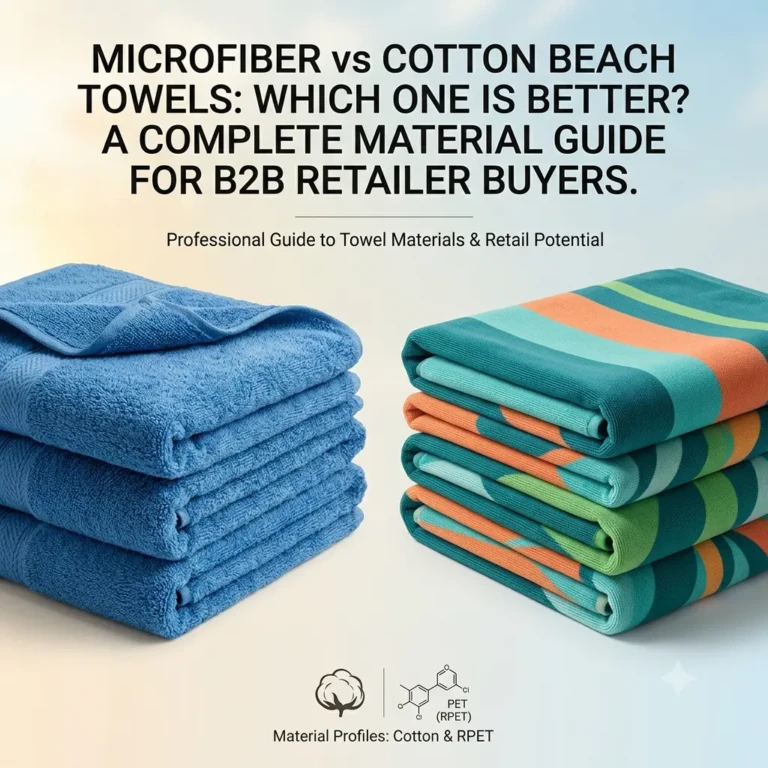
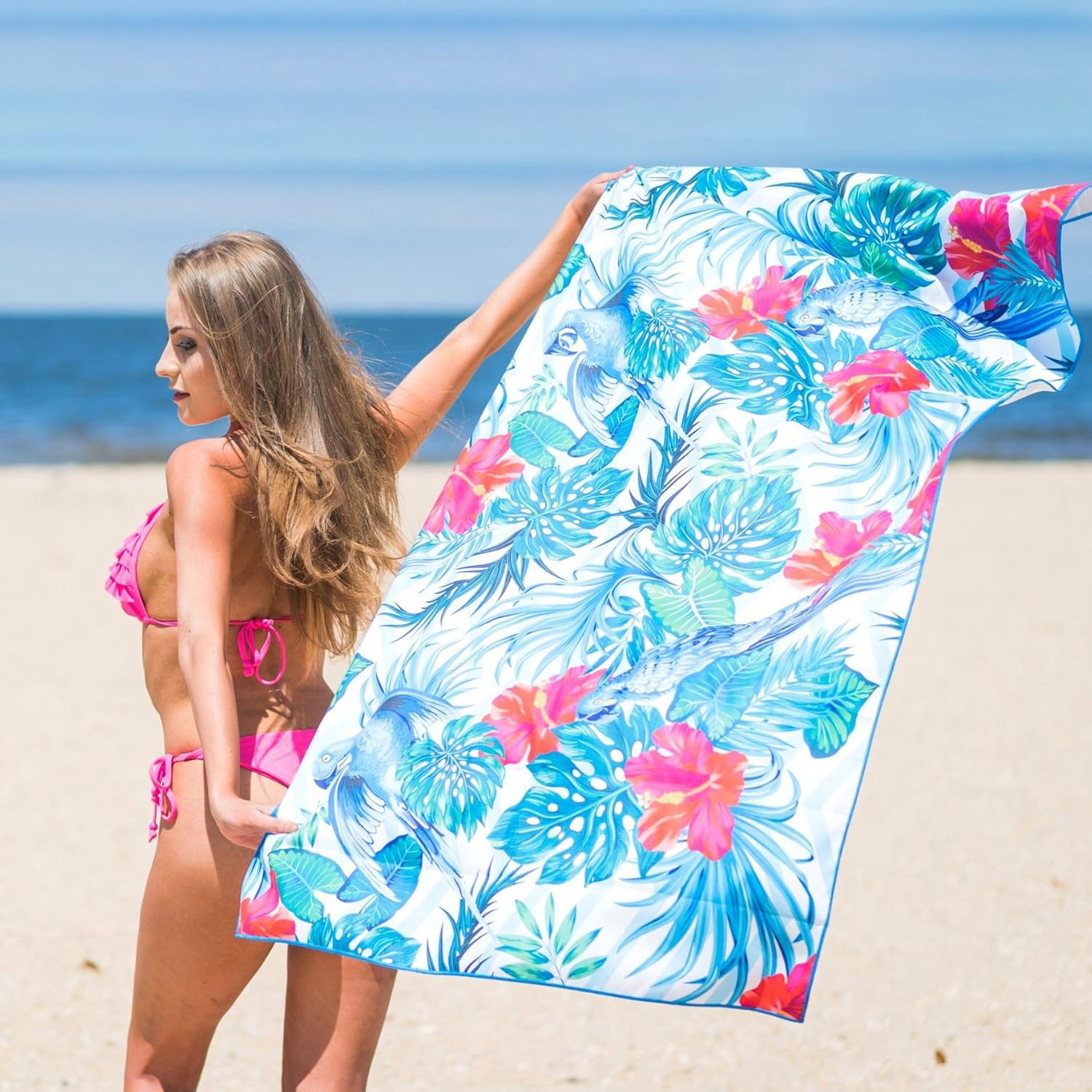
Why Microfiber Suede Is the Superior Choice for Your Beach Towel
When choosing a beach towel, the material makes all the difference. Microfiber suede, especially when made from 100% RPET (recycled PET), offers unmatched advantages for today’s eco-conscious beachgoer. Below are five compelling reasons why microfiber suede towels should top your list — backed by facts on quick-dry performance, sand-free comfort, sustainability, and resource savings.
1. Quick-Dry Performance
One of the standout features of microfiber suede beach towels is their amazing quick-dry ability. With a typical weight of 200–300 gsm, these towels are engineered to dry much faster than traditional cotton counterparts. In fact, microfiber fabric can dry 2–3 times faster than cotton, effectively reducing odors caused by prolonged dampness and ensuring a fresh towel every time
This combination of moderate weight and fine weave allows microfiber suede to absorb water efficiently while releasing it quickly during air exposure — perfect for back-to-back use at the beach or pool.

2. Sand-Free and Easy to Clean
A common beach annoyance is sand sticking to your towel. Microfiber suede solves this with a smooth surface that repels sand — just give the towel a shake and the sand falls away effortlessly No more wet, sandy towels dragging into your bag or car.
Moreover, these towels are machine washable, gentle on fabric, and maintain their sand-resistant and quick-dry properties even after repeated washing.
3. 100% RPET Made from Recycled Plastic Bottles
Microfiber suede beach towels made from 100% rPET are not just performance heroes — they’re eco-heroes too. The yarn is derived from recycled PET bottles through a process of shredding, melting, and re-spinning into high-performance fibers
For instance, one supplier indicates that each 80 cm × 160 cm towel requires 20 recycled plastic bottles . Using that as our baseline:
- 20 standard 500 ml plastic bottles (about 20 × 500 ml = 10 liters of bottle volume) are diverted from landfill or ocean waste for each towel.
- This creates a strong environmental statement: every towel you buy repurposes 20 bottles.

4. Water and Energy Savings
Producing rPET microfiber consumes significantly less energy and water compared to virgin polyester. One leading producer reports reductions in key resource use by approximately:
- 30–44% less water usage
- 26%–31% less CO₂ emissions
- Lower energy consumption overall
While precise water-saving figures for a single towel may vary, the downstream environmental impact is clear: microfiber suede beach towels made from rPET meaningfully reduce water and carbon footprints versus conventional materials.
5. Five Key Advantages Summarized
Bringing it all together, here are five top advantages of microfiber suede (rPET) beach towels:
- Ultra Quick-Drying – At 200–300 gsm, drying speed is 2–3× faster than cotton, minimizing odor and dampness
- Sand-Repellent – Smooth texture ensures sand slides off instantly, keeping your space clean
- Eco-Sustainability (100% rPET) – Made from recycled plastic bottles — about 20 bottles per towel
- Resource Efficiency – Production uses substantially less water and energy and emits less CO₂ compared to virgin polyester
- Durability & Practicality – Lightweight and compact, microfiber suede towels are soft, durable, machine-washable, and maintain performance over hundreds of uses
Resource Breakdown: rPET Towel from Plastic Bottles
| Metric | Estimate per 80×160 cm Towel |
|---|---|
| Plastic bottles recycled | ~ 20 (standard 500 ml bottles) |
| Raw material diverted | ~ 10 L total bottle volume |
| Environmental benefits | Lower water, energy, and CO₂ impacts |
| Durability | Retains features across many washes |
| Total weight | 200–300 gsm microfiber suede |
Final Thoughts
If you’re selecting your next beach towel, microfiber suede made from 100% rPET is a no-brainer — combining performance, comfort, and eco-responsibility. Here’s how your purchase adds value:
- Quick Drying means less hassle and odor.
- Sand-Free design keeps things tidy.
- Recycled content means you’re helping reduce plastic waste (around 20 bottles per towel).
- Lower resource footprint supports sustainable manufacturing.
- Long-lasting quality ensures you get years of beach enjoyment.
In short: every microfiber suede towel you buy isn’t just a smart choice for your beach day — it’s a smart choice for the planet.